Misophonia
OVERVIEW
Consensus Definition of Misophonia
“Misophonia is a disorder of decreased tolerance to specific sounds or stimuli associated with such sounds. These stimuli, known as “triggers,” are experienced as unpleasant or distressing and tend to evoke strong negative emotional, physiological, and behavioral responses that are not seen in most other people. Misophonic responses do not seem to be elicited by the loudness of auditory stimuli, but rather by the specific pattern or meaning to an individual. Trigger stimuli are often repetitive and primarily, but not exclusively, include stimuli generated by another individual, especially those produced by the human body.” (Swedo et al, 2022, p. 10).
Our Services
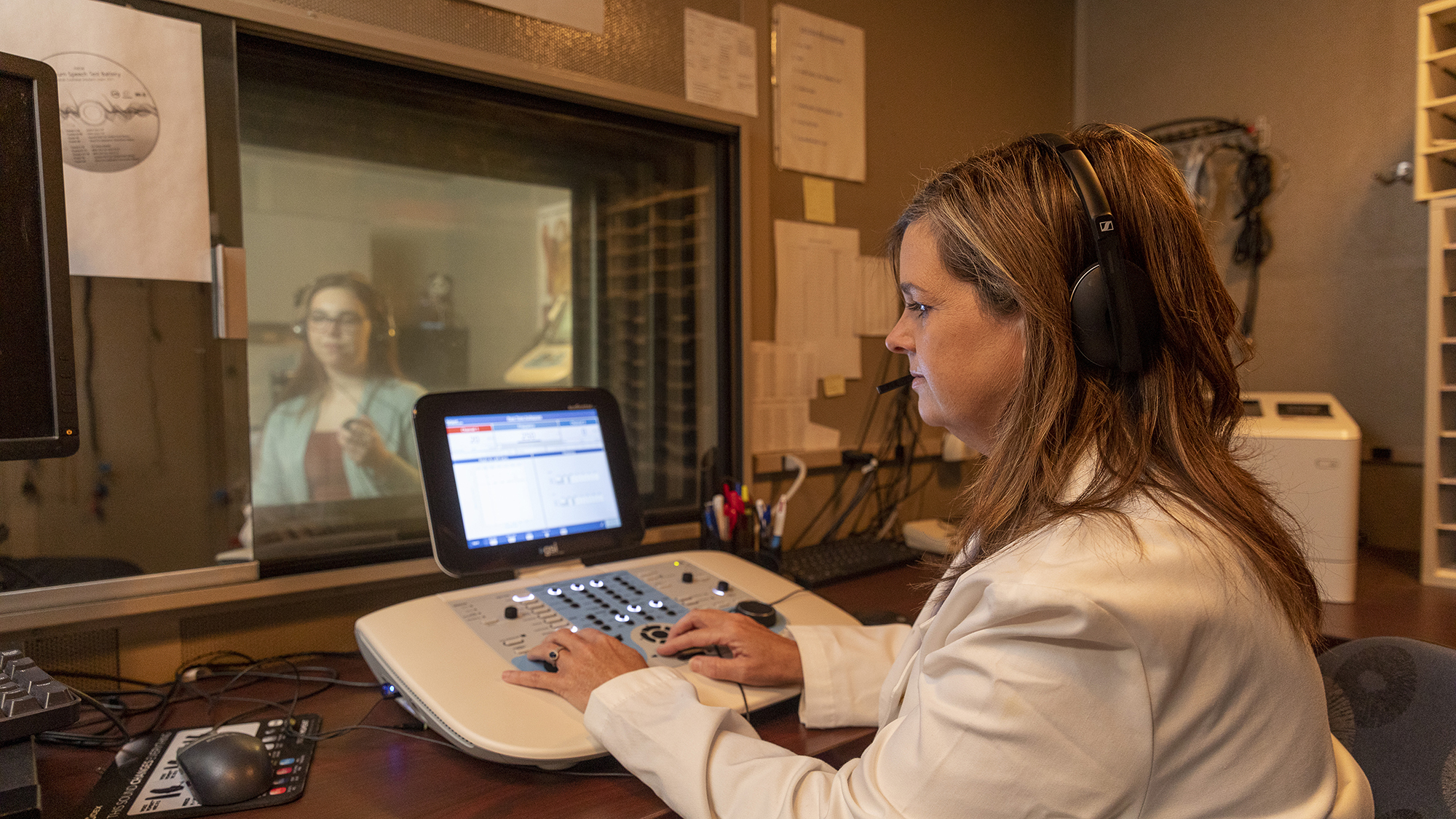
UNCG Speech and Hearing Center specializes in helping children and adults with misophonia get relief and control over their symptoms. Our audiological approach includes a combination of sound therapy, informational counseling and coaching, and strategies for emotional regulation.
Options exist for effectively managing misophonia in everyday life. Consistent daily support for people with misophonia allows them to overcome barriers imposed by triggers and successfully engage in both essential and desirable activities. Tools that decrease awareness of triggers are helpful for addressing both discomfort in the moment as well as anticipatory distress, which can reinforce the impact imposed by bothersome sounds. In so doing, the importance of triggers and the amount of attention paid to them may lessen over time. Finally, tools that enable a person with misophonia to have more control over sound exposure in everyday situations can mitigate nervous system dysregulation and permit use of self-soothing exercises and techniques such as deep breathing, progressive muscle relaxation, attentional shifting, and mindfulness.
Use of sound to enrich the acoustic environment (“sound therapy”) is a widely accepted approach rooted in Tinnitus Retraining Therapy (Jastreboff & Jastreboff, 2000). Like tinnitus, which is an internally generated sound that some people find bothersome, environmental sound triggers activate the limbic and autonomic nervous systems leading to emotional disturbance and neurophysiological dysregulation. In general, sound therapy refers to the use of a steadystate or another sound that interacts with triggers thereby decreasing awareness and providing a sense of relief and control.
Sound therapy is not simply the addition of “white noise.” Rather, sound therapy is a prescriptive sound stimulus that is customized for an individual’s specific triggers. While there is currently no standardized or universally applied approach, it also is important to recognize that no two people with misophonia are identical. Thus, sound therapy can (and should) be modified as needed to provide individualized support.
There are both low-tech and high-tech options for sound therapy that can be helpful for individuals with misophonia. Some people opt to use an app that can be played through a speaker or headphones, while others prefer a sound generating ear-level device fitted by an audiologist. Use of noise cancelling headphones, earplugs, and ear filters are other tools that people with misophonia often find helpful in certain situations. Like sound therapy, there is no agreed upon choice that works for everyone.
In conclusion, management of misophonia is a very personal choice. There is not a “one size fits all” approach. However, there are tools that many people find helpful and a lifeline to daily activities. While management of misophonia may not seek to eliminate sensitivity to triggers completely, these approaches provide consistent daily support while an individual explores other pathways forward.
Dr. Lisa Fox-Thomas, Ph.D. is a licensed audiologist in North Carolina, South Carolina, and Virginia. Contact the Center to schedule a remote consultation to learn more.
Research Study OpportunitY:
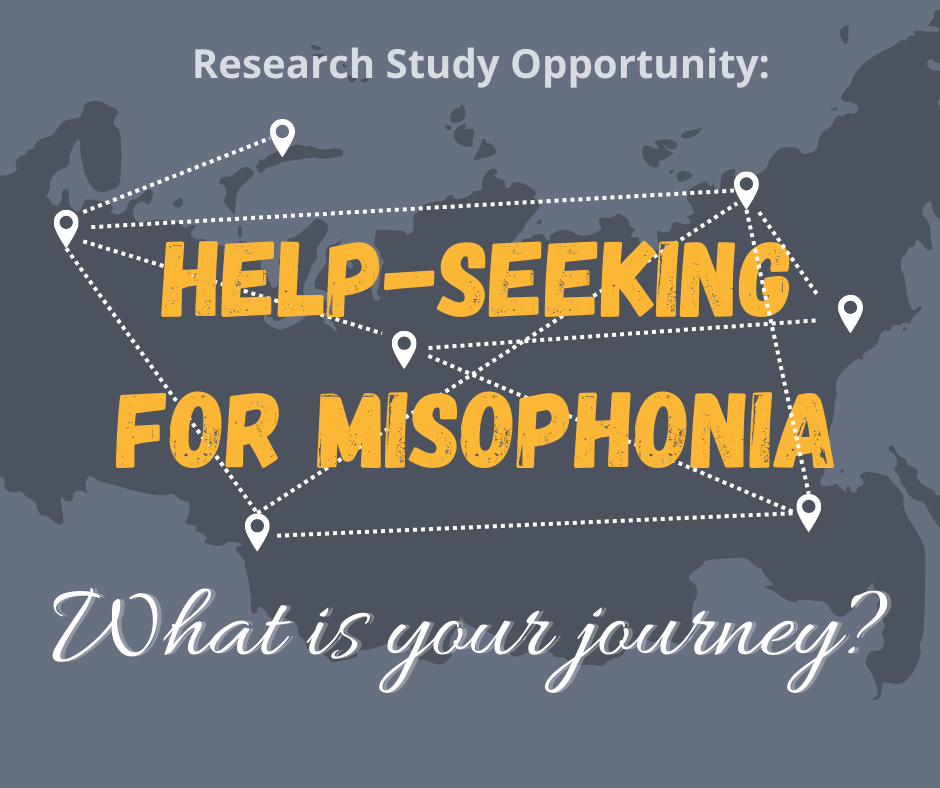
Help-seeking for MISOPHONIA – What is your journey?
Help is needed to learn more about the “journey” people with misophonia take when seeking help and the “roadblocks” they may encounter along the way. Dr. Lisa Fox-Thomas from the University of North Carolina at Greensboro is conducting a research study that aims to “map” the help-seeking journey for misophonia to provide better access to services and more support for members of the community moving forward.
You may participate in this research study if you:
✔️ are a person over the age of 18 years of age,
✔️ are located in the U.S. and can read/write in English,
✔️ have sought help for yourself or someone else with misophonia, and
✔️ wish to share about journey seeking help
To learn more about this online survey that is completely anonymous, click on the following link. It is estimated that the survey will take 15 – 20 minutes to complete. Thank you for your help!